Last updated: December 01, 2025
Written by Balotellio_Writer, Home Insurance & Property Basics Educator
Insurers are obsessed with your roof right now.
In many states, companies are:
- Refusing to renew policies because the roof is “too old”
- Asking for proof of roof age before they’ll bind coverage
- Offering discounts if you have newer or impact-resistant roofing
In places like Florida, law now spells out what insurers can and can’t do based on roof age, including requiring roof inspections once roofs hit a certain age.
So “roof age verification for home insurance” isn’t just paperwork; it’s the difference between:
- Keeping decent coverage at a sane price
- Or scrambling when your insurer suddenly says “replace the roof or we’re out”
This guide walks through:
- Why insurers care so much about roof age
- What proof they’ll accept (photos, invoices, permits, inspections)
- How wind ratings and impact-resistant shingles can help
- A practical checklist you can follow before your next renewal
1. Why Insurers Care About Roof Age So Much
From the insurance company’s point of view, your roof is the first line of defense against:
- Wind and hail
- Rain and snow
- Leaks and interior water damage
Studies and market data show that roof condition and age are major predictors of home insurance claims and losses.
Key reasons they care:
- Older roofs = more likely to leak or blow off in storms, especially if not maintained.
- Weather losses are exploding (hail, wind, hurricanes), and roofs are at the center of those claims.
- Some homeowners wait until roofs are 15–20+ years old, then try to “get a free roof” through insurance by filing storm claims, which insurers hate (and are pricing against).
In states like Florida, updated laws say insurers can’t deny or non-renew only because a roof is under 15 years old, and must allow inspections for roofs 15+ years old before forcing replacement.
But none of that works in your favor if you can’t prove your roof’s age and condition.
2. How Insurers Verify Roof Age (Not Just What You Tell Them)
You might think you can just type “roof: 2016” on the app and call it a day.
Insurers increasingly double-check that info using:
- Your documents (what you provide)
- Third-party data
- Aerial or street-level photos
Here’s how they do it.
2.1 Documents from You
Most companies will ask for one or more of:
- Roof replacement invoice or contract from a roofing company
- Paid receipt showing the date and scope of the roof job
- Building permit for roof replacement or major repair
- Sometimes a roof inspection report from a licensed roofer or inspector
A lot of carriers treat a contractor invoice plus proof of payment as the gold standard for roof age verification for home insurance.
2.2 Public Records, Permits, and Data Vendors
Even if you don’t have paperwork handy, insurers can often buy roof-age estimates from data vendors.
Example:
- Companies like Verisk offer roof-age products that combine permit data, tax assessor records, aerial imagery, and other sources to estimate how old a roof is.
If your application says “roof replaced 2020” but their data says “original roof 2005,” they may:
- Request proof from you
- Adjust your pricing
- Or even decline or non-renew if they believe the roof is too old or in poor condition
2.3 Aerial, Drone, and Street-View Photos
Insurers are now heavily using aerial and satellite imagery to check roofs.
Recent reporting shows that:
- Companies use planes, satellites, or drones to scan neighborhoods and flag roofs that look worn or damaged.
- In places like Connecticut, homeowners have been non-renewed based on roof photos that show discoloration or algae, even when contractors say the roof is structurally fine.
This is a big deal for roof age verification for home insurance, because:
- The insurer might assume a roof is older than it is based on how it looks
- You may need your own photos and roofer documentation to prove otherwise
3. Best Documents to Prove Roof Age (Ranked from Strongest to Weakest)
Not all proof is equal. If you’re trying to satisfy roof age verification for home insurance, here’s the hierarchy most underwriters like:
- Roof replacement contract + paid invoice
- From a licensed roofer
- Clearly shows the date and scope (“tear-off and replace with new shingles”)
- Permit + final inspection sign-off
- Roof-replacement permit issued by your city/county
- Final approval date is a strong indicator of install year
- Roof inspection report
- From a licensed home inspector or roofing contractor
- States approximate age, remaining life, and current condition
- Seller disclosures and closing documents (if you just bought the home)
- Disclosure forms that say “roof replaced in 2018”
- Pre-purchase inspection report noting roof age
- Photos plus written roofer statement
- A roofer letter or email estimating age based on material type, wear, and code updates
- Your photos that support the condition (close-up and wide shots)
- Your own estimate (“I think it’s 10–15 years”)
- Weakest on its own
- Usually only accepted temporarily, subject to later verification
When in doubt, your goal is to move up this list — from “guess and selfies” toward “permits and paid invoices.”
4. How to Photograph Your Roof for Insurers
Good photos can help you:
- Prove the roof is newer or in good condition
- Challenge bad aerial imagery
- Support your case if an underwriter or inspector questions the roof
Here’s a simple photo checklist.
4.1 Exterior Overview Shots
Take clear photos of:
- Front of the house, showing the full roof
- Back of the house
- Any sides with major roof sections
- Detached structures (garage, shed) with separate roofs
Tips:
- Take photos in daylight, not into the sun
- Stand far enough back to capture the full roof line
- Avoid super wide “fisheye” distortion if possible
4.2 Close-Ups of Each Roof Plane
Walk the property and take:
- Close shots of shingles or roofing material on each side
- Detail of edges, valleys, flashing around chimneys and vents
- Any repairs or upgraded sections
You’re trying to show:
- No curling, missing, or heavily cracked shingles
- No major moss or heavy granule loss (for asphalt)
- Clean, securely fastened metal or tile
If you have a roofer on site, ask them to snap and share their own pictures as well.
4.3 Interior Attic/Decking Photos (Optional but Powerful)
If it’s safe and accessible:
- Take attic photos showing roof decking (the wood underneath)
- Look for clean wood and no obvious stains or daylight shining through
This can support your argument that the roof structure is sound, especially when an insurer is worried about leaks or hidden damage.
4.4 Label and Store Everything
Save your photos with:
- Date taken
- Short label (e.g., “North roof slope – Oct 2025”)
Store them in a cloud folder so you can share a link or upload easily if an insurer asks.
This sounds nerdy, but when you’re fighting a non-renewal letter, organized proof beats “some random blurry photos from my phone.”
5. Roof Inspections and Certifications (When Paperwork Alone Isn’t Enough)
Sometimes a company will say:
“We need an inspection showing the roof has at least X years of life left.”
This is now specifically written into law in Florida for roofs 15+ years old: insurers have to allow a homeowner to get a roof inspection, and if the inspector certifies 5+ years of remaining useful life, the insurer can’t deny or non-renew solely due to age.
Even outside Florida, many carriers use similar logic.
Here’s how to approach it:
- Hire a licensed roofer or inspector
- Ask for a written report stating:
- Roof material and estimated age
- Overall condition
- Estimated remaining useful life
- Include photos in the report if possible
- Ask for a written report stating:
- Ask about local “roof certification” forms
- Some insurers or state regulators have standard forms (especially in coastal or hail states)
- If your carrier has a preferred form, use it
- Submit the report quickly
- When your insurer asks for roof age verification for home insurance, don’t wait until the non-renewal date is a week away
- Upload through the portal or email as directed
- Use the report to shop around
- If your current company still wants the roof replaced right away, another insurer might accept the certification and offer coverage
6. Wind Rating and Impact-Resistant Shingles: Bonus Points with Insurers
Roof age is only half the story. Wind resistance and impact resistance can help you get:
- Better acceptance for older roofs
- Discounts if you’ve invested in higher-grade materials
6.1 Impact-Resistant (Class 4) Shingles
Impact-resistant shingles are tested under standards like UL 2218. A Class 4 rating is the highest common level of impact resistance, meaning shingles can withstand repeated hits from a 2-inch steel ball dropped from 20 feet with minimal damage.
Manufacturers and industry articles note:
- Class 4 shingles are designed to better resist hail and flying debris in storms
- Some insurers offer premium discounts for Class 4 roofs; one example (State Farm) has historically offered impact-resistant shingle discounts, and NBC News has reported potential savings up to 35% of home insurance premiums in certain cases.
If you’ve installed impact-resistant shingles:
- Keep the product spec sheet or manufacturer documentation
- Ask your roofer for a written statement that the roof is UL 2218 Class 4 (or equivalent)
- Send this to your insurer and ask directly about impact-resistant roof discounts
6.2 Wind Ratings and Building Codes
Certain shingles and roof systems are rated to withstand higher wind speeds (for example, some Class 4 setups are rated for up to 130 mph winds, similar to a Category 4 hurricane).
In high-risk states, insurers may:
- Require higher wind ratings for new roofs
- Offer discounts for roofs built to newer strong-wind codes
- Require roofing nails, underlayment, and deck fastening that meets specific standards
If your roof was installed under a newer building code after a major code update (like post-hurricane or post-wildfire reforms), it’s worth mentioning that to your insurer and keeping the permit and code references handy.
7. Dealing with Aerial Imagery and Surprise “Old Roof” Letters
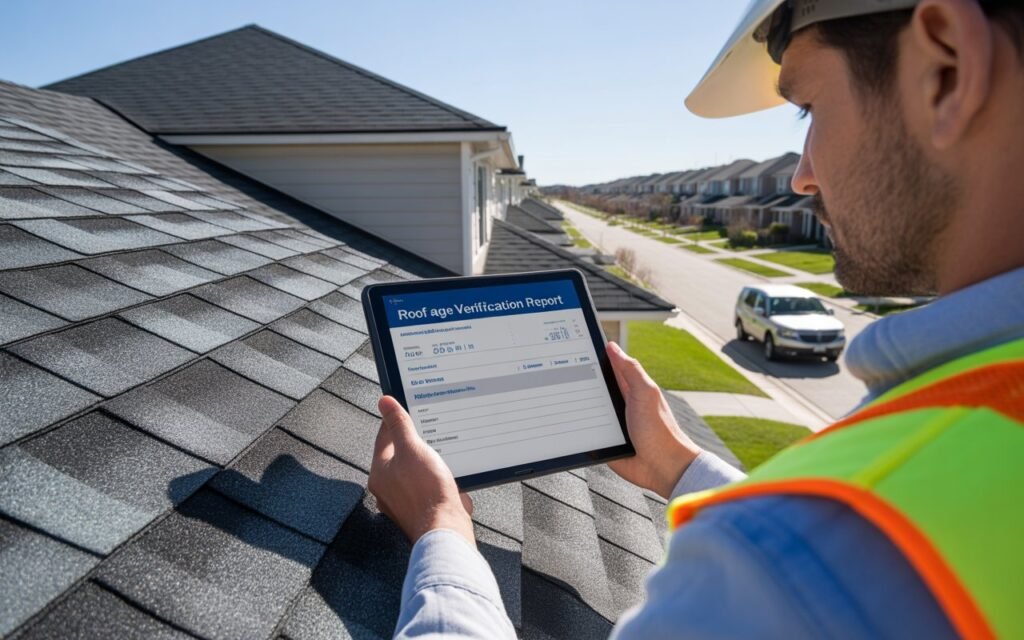
Because insurers now use aerial imagery and AI to evaluate roofs, homeowners in multiple states have reported:
- Sudden non-renewal letters claiming the roof is worn, based on overhead photos
- Insurers demanding new roofs even when local contractors say the roof is fine
Investigations have shown:
- Insurers may rely on aerial photos to detect “staining or discoloration” and flag roofs as bad risk
- Regulators in states like Connecticut have warned carriers that cosmetic wear alone is not a valid reason to drop coverage; only material degradation that affects performance should count.
If that happens to you:
- Get your own roof inspection
- Ask a roofer to document the actual condition and remaining life
- Gather your proof
- Invoices, permits, photos, inspection report
- Appeal with your insurer
- Send all documentation and ask for a reconsideration
- Know your rights
- Many state insurance departments let you file a complaint if you believe an insurer is unfairly non-renewing your policy based solely on bad imagery or age with no material risk.
Having good roof age verification for home insurance makes it much easier to push back.
8. Quick Checklist: Roof Age Verification for Home Insurance
Here’s a simple list you can drop right into your blog:
- Find your roof year
- Ask the previous owner, roofer, or check old emails and documents
- Collect hard proof
- Contractor invoice and receipt
- Roof permit and final inspection
- Any roof inspection reports
- Take clear photos
- Full exterior views of each side
- Close-ups of shingles and flashing
- Optional attic/decking shots if accessible
- Note roof material and ratings
- Shingle brand and type
- Impact resistance (Class 4 or similar)
- Wind rating if available
- Ask your insurer specific questions
- “What proof do you require for roof age verification?”
- “Do you offer discounts for newer roofs or impact-resistant shingles?”
- Save everything in one folder
- So when you switch carriers or renew, you can upload it in minutes
9. FAQ: Roof Age Verification for Home Insurance
Q1: My seller told me the roof is “about 10 years old” but I have no paperwork. What should I do?
Try to track down:
- The seller’s roofer or contractor
- Permit records from your city/county website
- A licensed roofer who can inspect and estimate age in writing
Then use those documents as your roof age verification for home insurance, instead of just guessing.
Q2: Is roof age or condition more important to insurers?
Both matter. Many carriers use rough age thresholds (like 15–20+ years) to trigger extra scrutiny, but industry analysis stresses that condition is just as important as age. A well-maintained 18-year-old roof can sometimes be more acceptable than a neglected 10-year-old roof.
Q3: Can I get a discount for a new or impact-resistant roof?
Often yes. A new roof or Class 4 impact-resistant shingles can qualify for roof credits or separate discounts with some insurers, especially in hail- and wind-prone states.
Q4: What if my insurer’s aerial photos are wrong?
You can:
- Get a roofer’s inspection and written report
- Take your own photos
- Send everything to the insurer and request a re-evaluation
- If they refuse, you may be able to file a complaint with your state insurance department and/or shop for another carrier.
Q5: When should I start gathering roof documentation?
Don’t wait until a non-renewal or claim. Start a roof file as soon as you:
- Replace or significantly repair the roof
- Buy the house
- Hit key age milestones (10, 15, 20+ years)
That way, when someone asks for roof age verification for home insurance, you’re not digging through old boxes trying to remember which year the storm happened.