Last updated: December 06, 2025
Written by Balotellio_Writer, Home Insurance & Money Basics Educator
You finally think your homeowners insurance is sorted… then your agent or quote page throws these at you:
- Water backup
- Service line
- Ordinance or law
- Equipment breakdown
- Scheduled valuables
And you’re left wondering:
“Are these just upsells, or do I actually need them?”
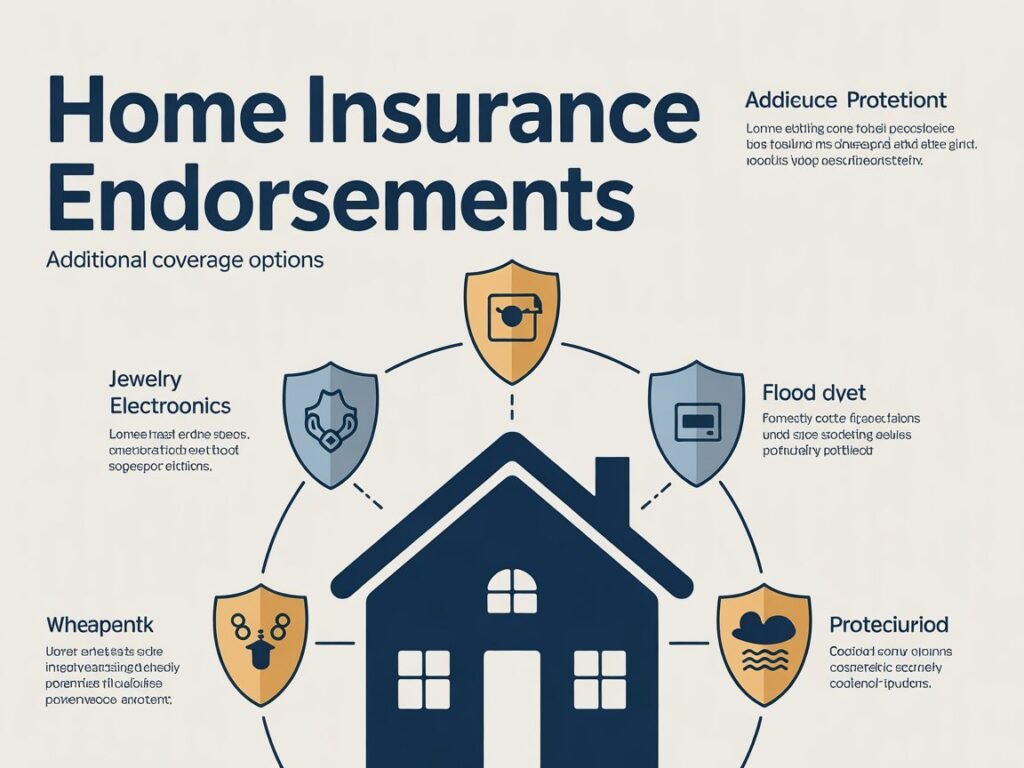
This guide is your “home insurance endorsements explained” cheat sheet.
We’ll cover what endorsements are, what the big ones do (water backup, service line, ordinance or law), give real-dollar examples, and show you how to choose without overpaying.
1. What Is a Home Insurance Endorsement, Really?
In plain English, a home insurance endorsement (also called a rider) is:
A small add-on to your policy that either adds coverage you don’t have or changes a limit or rule in your standard policy.
Bankrate and other insurance guides describe endorsements as policy add-ons you can use to extend coverage for things your basic policy doesn’t fully protect, like service lines, water backup, high-value items, or ordinance or law upgrades. Capital One+1
Why do endorsements exist? Because a standard homeowners policy:
- Covers some major risks (fire, wind, theft, etc.)
- Doesn’t cover a bunch of common and expensive problems by default (like sewer backups or underground pipes) moneysupermarket.com
So endorsements are basically:
- “Patch packs” for the coverage gaps in your base policy
- Usually cheap compared to the risk they protect against
Let’s walk through the big three your readers will see most often:
water backup, service line, and ordinance or law.
2. Water Backup Endorsement (Sewer, Drain, Sump Overflow)
This is one of the most misunderstood parts of home insurance.
Most standard homeowners policies do not cover damage from:
- Sewers backing up
- Drains backing up
- Sump pump overflowing or failing
Insurers like Hanover and Hippo spell it out clearly: water backup and sump overflow coverage is optional – you have to add it as an endorsement if you want protection. moneysupermarket.com+3Experian+3Investopedia+3
2.1 What Does Water Backup Coverage Do?
A water backup endorsement adds coverage when water:
- Backs up through sewers or drains
- Overflows or backs up from a sump, sump pump, or similar system
- Sometimes from certain interior lines that overflow or fail
Guides from Kin, Hippo, and other insurers say it typically covers:
- Damage to the structure: floors, walls, foundation, built-ins
- Personal property: furniture, electronics, appliances, clothes, etc.
- Cleanup and sometimes mold remediation (subject to limits) Consumer Financial Protection Bureau+3Investopedia+3TSB+3
2.2 Why You Should Care (Basement Scenario)
Picture this:
- Heavy rain + overwhelmed sewer = filthy water backing into your finished basement
- You end up with ruined:
- Flooring
- Drywall
- Furniture
- Maybe your washer, dryer, or home office setup
Costs can easily hit $10,000–$25,000+ depending on finishes and electronics.
If you don’t have a water backup endorsement:
- Standard home insurance typically says “nope” — this kind of backup/overflow is excluded. Experian+1
If you do have it, you might see a coverage limit like:
- Water backup coverage: $10,000, $25,000, $50,000
Example:
- Basement water backup causes $18,000 in damage
- You have a $25,000 water backup endorsement and a $1,000 deductible
- Insurer might pay: $18,000 – $1,000 = $17,000
Without the endorsement, you’d be paying the full $18,000 yourself.
2.3 Key Things to Check
- Is water backup included at all, or do you need to add it?
- What’s the limit? $5k? $10k? $25k?
- Is the limit enough for a finished basement?
- Does it cover both structure and contents?
For a blog angle, you can position water backup as:
“The one endorsement almost everyone with a basement should at least consider.”
3. Service Line Coverage Endorsement
This one hides in the dirt – literally.
Most homeowners are shocked to learn they’re responsible for underground utility lines between the street and their home. If those lines break, standard home insurance often doesn’t pay to dig up and fix them.
Service line coverage is an endorsement that fills that gap.
3.1 What Is Service Line Coverage?
Insurers like Progressive, Plymouth Rock, and others define service line coverage as optional coverage that helps pay to repair or replace underground lines that run from the street (or property boundary) to your home. Capital One+5Consumer Financial Protection Bureau+5Consumer Financial Protection Bureau+5
Typical covered lines include:
- Water pipes and sewer lines
- Gas lines
- Electric lines
- Internet, cable, and phone lines
- Sometimes sprinkler or irrigation lines
It may also cover things like:
- Excavation (digging up the yard)
- Patching your driveway or yard after the repair
- Some associated damage (depends on policy wording) Better Money Habits+4Consumer Financial Protection Bureau+4Consumer Financial Protection Bureau+4
3.2 Real-Dollar Example: Broken Sewer Line
Imagine your main sewer line cracks due to tree roots or gradual deterioration — a very common real-world problem.
- Plumber’s camera shows a collapsed pipe 30 feet from the house
- You need excavation, replacement pipe, and yard repair
Typical ballpark ranges (from various insurer and plumbing estimates):
- Digging + repair + landscape fix: $5,000–$15,000+, sometimes more depending on depth and length
With no service line coverage:
- You’re paying for all that out of pocket
With a service line endorsement:
- Many policies offer limits in the $10,000–$25,000 range for a modest extra premium Capital One+4Consumer Financial Protection Bureau+4Experian+4
So if your sewer job costs $9,000 and you have:
- Service line limit: $10,000
- Deductible: $500
You might pay $500, insurer pays ~$8,500.
3.3 What Service Line Usually Covers vs Not
Common covered causes (depending on the policy) can include:
- Wear and tear, rust, corrosion
- Tree root intrusion
- Freezing damage
- Mechanical or electrical breakdown
- Weight of vehicles or heavy equipment on the yard Experian+4Consumer Financial Protection Bureau+4Consumer Financial Protection Bureau+4
Typical exclusions might include:
- Lines on city property beyond your property line
- Septic systems (in many policies)
- Lines not connected and in use
- Certain well or fuel tank lines (varies by carrier) Riegel Federal Credit Union+1
Blog takeaway for readers:
“If you own an older home with big trees and original pipes, service line coverage can save you from a nasty $10k dig-up bill.”
4. Ordinance or Law Coverage (Building Code Upgrades)
This one sounds boring until you get hit with a building inspector and a big repair bill.
Ordinance or law coverage is all about building codes – the rules for how homes must be built today.
Standard homeowners insurance usually:
- Pays to put your house back the way it was,
- But doesn’t automatically pay for upgrades needed to meet current building codes if your home is older. Investopedia+4Experian+4M&S Bank+4
Ordinance or law coverage is an endorsement (sometimes built-in at a small limit) that helps bridge that gap.
4.1 What Does Ordinance or Law Coverage Do?
Progressive, Kin, Hippo and other sources explain it like this: ordinance or law coverage helps pay the extra cost to:
- Bring the damaged portion of your home up to current code
- Sometimes upgrade undamaged portions if code requires changes to the whole system (like wiring or plumbing)
- Demolish and remove parts of the home when code says you must tear more out than what was actually damaged M&S Bank+7Experian+7Experian+7
Example situations:
- Your 1970s electrical system isn’t up to modern code, so to fix one damaged area, code requires a full panel upgrade
- Your town now requires fire sprinklers or different insulation when more than a certain % of a structure is rebuilt
- Building code says you must tear down part of an undamaged wall to access and update wiring
4.2 Real-World Cost Example
Say:
- A kitchen fire causes $60,000 in damage
- Your standard coverage will pay to restore what you had, minus deductible
- But your town enforced a newer code that requires:
- Upgraded electrical in that part of the home
- A better ventilation system
- Certain fire-resistant materials
Those upgrades might add another $10,000–$20,000 in required costs that your basic policy won’t cover unless you have ordinance or law coverage. M&S Bank+4Experian+4Experian+4
If your ordinance or law endorsement has, say, a 10% dwelling limit ($40,000 on a $400,000 house), that extra code cost is much easier to absorb.
4.3 Key Questions for Readers
- Does my policy already include any ordinance or law coverage?
- If yes, how much? Sometimes it’s 10% of Coverage A; sometimes more or less. M&S Bank+2Aqua Card+2
- How old is my home, and how likely is it that current codes are very different from when it was built?
- What are typical building codes like in my area (earthquake, hurricane, wildfire rules, energy standards, etc.)?
Position in your blog like:
“If your home isn’t brand-new, ordinance or law coverage is the thing that pays when the building inspector says: ‘Sorry, it has to be done the new way.’”
5. Other Useful Endorsements Worth Mentioning
For a complete “home insurance endorsements explained” guide, it’s useful to briefly name a few other common add-ons your readers will see. Capital One+2Investopedia+2
You don’t need to go super deep here, just give quick snapshots.
5.1 Scheduled Personal Property (Valuables)
What it is: Extra coverage for specific high-value items that exceed normal policy limits, like:
- Jewelry
- Watches
- Art and collectibles
- Musical instruments
- High-end cameras
Why it exists: Standard policies often cap jewelry theft at something like $1,500–$2,500, and you may need an endorsement to fully cover a $7,000 ring or $10,000 collection. Investopedia+1
5.2 Equipment Breakdown
What it is: A kind of “mini home warranty” endorsement that can cover sudden, accidental breakdown of major systems like:
- HVAC
- Furnace/boiler
- Built-in appliances
- Electrical systems
Why it exists: Standard policies usually don’t cover mechanical or electrical breakdown that isn’t caused by an external peril. Some insurers offer equipment breakdown coverage as an inexpensive endorsement to fill that gap. Capital One+1
5.3 Identity Theft / Cyber Endorsements
What it is: Coverage to help with:
- Costs of restoring your identity
- Credit monitoring
- Some cyber-related losses (depending on policy)
Why it exists: Identity theft is common, and this endorsement helps with the cleanup costs and support, not the stolen money itself in many cases. Capital One
You can decide how deep you want to go on these in separate blog posts and cross-link them later.
Here’s a simple way to walk your readers through this without overwhelming them.
6. How to Decide Which Endorsements Are Worth It
Step 1: Know Your Base Policy Gaps
Encourage them to check or ask:
- Does my base policy cover sewer backup? (Usually no.) Experian+1
- Does it pay for underground service lines I own? (Usually no or very limited.) Better Money Habits+3Consumer Financial Protection Bureau+3Capital One+3
- Does it include any ordinance or law coverage already? (Sometimes yes, but limits may be low.) Virgin Money UK+3Experian+3Lloyds Bank+3
Step 2: Look at Your House and Lifestyle
Questions you can suggest:
- Do I have a basement, sump pump, older sewer lines, or live in a heavy rain area?
- Strong case for water backup endorsement
- Is my home older, with likely outdated wiring, plumbing, or structural standards?
- Strong case for ordinance or law coverage
- Do I have big trees, an older property, or know my town says I’m responsible for underground pipes and lines?
- Strong case for service line coverage
- Do I keep expensive jewelry or collectibles at home?
- Consider scheduled property
Step 3: Compare Cost vs Worst-Case Scenario
Most endorsements cost somewhere in the tens of dollars to a few hundred per year, depending on limits and insurer. Capital One
Have readers sanity-check:
- Water backup endorsement premium vs $15k flooded basement
- Service line coverage cost vs $8k sewer dig-up
- Ordinance or law endorsement vs $10–$20k+ code upgrades
If paying an extra $80–$150/year can protect against a $10k–$20k risk they absolutely cannot absorb, the math often works.
Step 4: Ask Smart, Specific Questions
Give them a script for their agent or insurer, for example:
- “What endorsements do most people with homes like mine in this area choose?”
- “What does my policy not cover that people are often surprised by?”
- “What are my current limits for water backup, service line, and ordinance or law?”
7. Quick FAQ: Home Insurance Endorsements Explained
Q1: Are endorsements required?
No. They’re optional add-ons. But some are strongly recommended based on your situation — especially water backup, service line, and ordinance or law for many homeowners. Capital One+3Investopedia+3Consumer Financial Protection Bureau+3
Q2: Do endorsements have separate deductibles?
Sometimes. Water backup and service line coverage often use your standard home deductible, but some insurers apply a separate, specific deductible. It depends on the carrier and state, so it’s worth asking. Consumer Financial Protection Bureau+2Compare the Market+2
Q3: Can I add endorsements later?
Usually yes, as long as:
- The insurer still offers them in your area
- You’re not in the middle of a known event (for example, you usually can’t add flood coverage while a storm is already hitting)
Q4: Do endorsements cover things that are completely excluded from my base policy?
Some do (like water backup or service line). Others extend or increase existing coverage (like ordinance or law or scheduled valuables). Always read the endorsement language: it tells you exactly what new coverage is being added and what exclusions still apply. Virgin Money UK+4Experian+4TSB+4
Q5: Are endorsements the same with every company?
No. Names may be similar, but details can vary:
- Different limits
- Different covered causes
- Different deductibles
That’s why online quotes can’t tell the full story; you often need to read the coverage description or talk to a human.
Final Thoughts
If you made it this far, you’re already ahead of most homeowners who never look beyond the price.
The big idea behind “home insurance endorsements explained” is simple:
Your base policy covers a lot, but not everything. Endorsements are where you quietly fix the most painful gaps.
For many homes, three endorsements deserve a serious look:
- Water backup – for gross, expensive basement or bathroom disasters
- Service line – for surprise pipe and wire problems under your yard
- Ordinance or law – for expensive “you must bring this up to code now” surprises
From here, you could link readers to deeper posts on each endorsement (for example, “Water Backup vs Flood Insurance,” or “Service Line Coverage vs Home Warranties”) and build out a whole mini-hub of smart homeowner protection content.