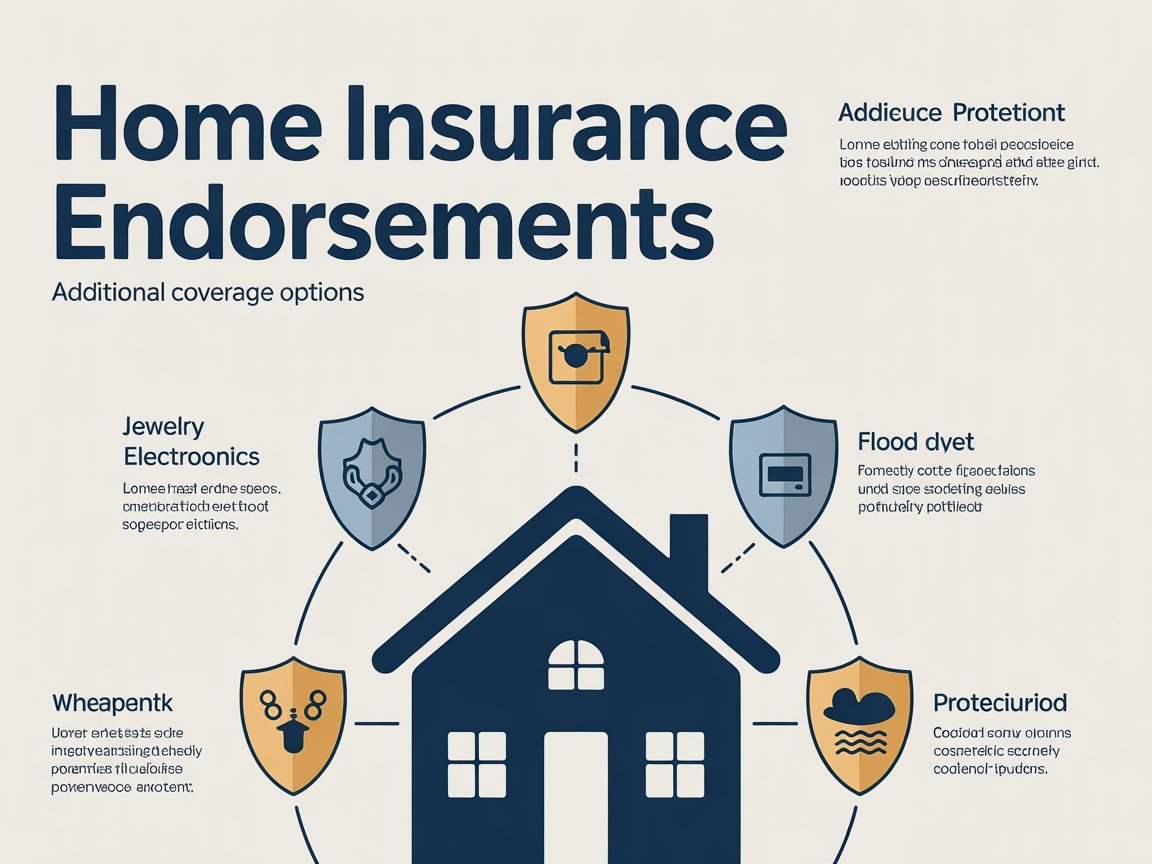
You can buy a solid homeowners policy and still have expensive gaps. That’s because the base policy is only the starting point.
Endorsements (also called riders) are add-ons that change the contract—by adding coverage, raising a limit, or changing a rule.1
- Endorsements change your policy terms and can be added at purchase, mid-term, or renewal (often changing premium).1
- Don’t shop by the endorsement name—verify the form wording and the limit/deductible.
- Start with your home’s biggest loss drivers: basements/drains, buried service lines, older-code homes, high-value items, and expensive systems.
1) What an endorsement is (and where to find it fast)
An endorsement is an amendment to an insurance contract that changes the original policy’s terms; it can be issued at purchase, mid-term, or renewal, and your premium may change.1
Where to look:
- Declarations (information) page: the summary page that identifies your policy, coverages, limits, premium and more.2
(Many insurers also list form/endorsement codes there; if not, they’re attached in your policy packet.) - Endorsement forms (PDFs): the actual rules. When a claim is disputed, the decision usually comes down to the wording in the policy + endorsement forms.
Tip: Endorsement names vary by company and state. Treat the label as a clue—then verify the form wording.
2) Water backup endorsement (sewer/drain backup, sump overflow)
A lot of people assume “water damage is water damage.” Insurers often treat sewer backup and sump pump overflow differently than a burst pipe—and it’s commonly not covered under a typical homeowners policy unless you add coverage.3
What it may help pay for (depends on wording/limits):
- Water/sewage damage to floors, walls, built-ins
- Damaged personal property (sometimes limited)
- Cleanup/restoration costs (often capped)
What to check before you buy:
- Separate limit (often capped even if your dwelling limit is high)
- Separate deductible (some policies add one)
- Does it apply to dwelling + contents, or only one?
- Any exclusions for repeated seepage/maintenance issues (common)
If you have a basement (finished or storage), this is one of the first endorsements worth pricing—cleanup and tear-out can get expensive fast.4
3) Service line coverage (underground pipes and wires you own)
Service line coverage is designed for underground utility lines running to your home—think buried water/sewer lines, power runs, cable/internet, or gas lines (eligibility varies). Progressive notes service line coverage may pay for repairs and can include related costs like excavation and landscaping, depending on the policy.5
What to confirm in your policy:
- What counts as “your” line (ownership boundaries matter)
- Whether excavation/landscaping is included and how it’s limited
- Limit + deductible
- Whether septic/well lines are excluded (varies)
This tends to make more sense for older homes, long runs to the street, and properties with mature trees.
4) Ordinance or law coverage (code upgrade costs after a covered loss)
After a covered loss, you may be required to rebuild to current building code—even if your home was built decades ago.
NAIC explains that an ordinance or law endorsement can pay the extra expense to rebuild in compliance with codes that didn’t exist when the home was originally built.6
Progressive similarly notes this coverage may help pay additional costs to bring your home up to code after a covered peril, up to your limit.7
Where it shows up in real claims:
- Electrical/plumbing updates required during repairs
- Insulation/ventilation/material requirements
- Demolition/removal requirements to access and rebuild
What to check:
- Is it included already? If yes, how much?
- Is the limit a % of dwelling coverage or a flat dollar amount?
- Does it include demolition/removal, or only the upgrade work?
If your home isn’t new, assume code issues can surface when walls get opened.
5) Scheduled personal property (valuables)
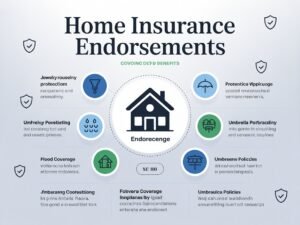
Most homeowners policies have category limits for certain valuables. NAIC notes a scheduled personal property endorsement
(also called a personal articles floater) can cover items whose value exceeds normal policy limits.6
Before you schedule items, check:
- Your policy’s category limits (jewelry, collectibles, cameras, etc.)
- Whether you need an appraisal/receipt
- Whether claims pay replacement cost vs. agreed value (varies)
- Worldwide coverage and deductible details
6) Equipment breakdown (mechanical/electrical failure)
Homeowners insurance is typically built around “named” sudden events like fire, wind, theft, etc.
Equipment breakdown coverage is usually designed for sudden mechanical/electrical/pressure failures in systems and appliances (coverage varies by insurer).
Travelers describes equipment breakdown coverage as paying repair or replacement costs for household equipment damaged by mechanical, electrical, or pressure failure—and it may also cover spoilage and additional living expenses in some cases.8
What to check:
- What counts as covered equipment (HVAC, appliances, electrical panels, etc.)
- Deductible and limits
- Spoilage coverage (if included)
- Exclusions for wear-and-tear/maintenance (common)
How to decide what’s worth it (without getting upsold)
Instead of shopping endorsements like a menu, start with your home’s “expensive failure points”:
- Basement, sump pump, older drains → price water backup coverage3
- Older home, trees, long utility runs → price service line coverage5
- Older construction / likely code changes → price ordinance or law coverage7
- Jewelry/collectibles over sublimits → consider scheduling valuables6
- Expensive HVAC/appliances → consider equipment breakdown8
Then do the part most people skip: compare the limit and deductible—not just “yes/no.”
Questions that get a clear answer (copy/paste script)
- “What common losses are excluded or capped on my base policy?”
- “Do these endorsements have separate limits or deductibles?”
- “Can you show me where this appears on my declarations page?”2
- “Please send the endorsement form wording (PDF). I want to read the actual terms.”
FAQ
Are endorsements required?
No. They’re optional add-ons that change policy terms.1
Can I add endorsements later?
Often yes, but availability depends on insurer, state rules, underwriting, and sometimes inspection/eligibility.1
Are endorsement names consistent across insurers?
No. Treat the label as a clue, then verify the wording in the form.
References
- NAIC. “What is an Insurance Endorsement or Rider?” (definition; can be issued at purchase, mid-term, or renewal; premium may change).
Source
↩ - NAIC. “Understanding Your Homeowners or Renter’s Policy” (declaration/information page lists policy details, coverages, limits, premium and discounts).
Source
↩ - Insurance Information Institute (III). “Insure Against the Risk of Sewer Backup” (sewer backups/sump issues not covered under a typical homeowners policy; endorsement/separate product needed).
Source
↩ - The Hanover. “The answers to all your questions about water backup…” (water backup not typically covered; optional add-on coverage).
Source
↩ - Progressive. “What Is Service Line Coverage?” (may cover repair/replacement; may also cover excavation and landscaping depending on policy).
Source
↩ - NAIC. “A Consumer’s Guide to Home Insurance” (scheduled personal property/personal articles floater; ordinance or law endorsement definition).
Source (PDF)
↩
↩ - Progressive. “What Is Ordinance or Law Coverage?” (building code/ordinance coverage helps pay to bring home up to code after a covered peril; standard policies typically won’t).
Source
↩ - Travelers. “Equipment Breakdown Coverage for Homeowners” (repair/replacement for mechanical/electrical/pressure failure; may include spoilage and additional living expenses).
Source
↩
Disclaimer: This is general information, not insurance advice. Discounts and eligibility vary by insurer, policy, and location.

Home insurance & home-safety writer
Research-focused writer covering homeowners insurance terms, deductibles, endorsements, and loss-prevention basics.
Articles are built from primary insurer/regulator sources and updated when program rules change.