Last updated: December 08, 2025
Written by Balotellio_Writer, Home Insurance & Smart Home Basics Educator
If you’ve heard that installing leak sensors can earn a water leak detector insurance discount, you’re not imagining it.
Insurers are getting hammered by water damage claims, so they’re quietly rewarding people who install smart water leak detectors and automatic shutoff valves. In the U.S., water damage makes up almost 24% of all homeowners claims, with average payouts up to $15,000.
That’s why more insurers now offer:
- Premium discounts for smart leak detectors
- Extra savings for automatic water shutoff valves
- Even free devices or hardware discounts in some programs
In this guide, you’ll learn:
- How the water leak detector insurance discount works
- Where to place sensors so they actually prevent claims
- How to set alerts and monitoring so your system isn’t just “set and forgotten”
1. Do Water Leak Detectors Really Get Insurance Discounts?
Short answer: sometimes yes, sometimes no — and it depends on your insurer and device.
Examples from current programs and research:
- Some U.K. insurers like Aviva offer up to 10% off for smart water leak detectors; Direct Line offers around 5% for integrated systems.
- Chubb notes that clients may get a discount on the cost of water sensors and can be eligible for a discount on certain property policies where approved systems are installed, in select states.
- A Florida-based insurer, Vyrd, advertises up to a 40% discount on the water portion of the premium for policyholders who install and activate their free smart water sensors.
- Research on U.S. carriers shows many now include leak detection in “smart home” or “protective device” discounts, where smart leak detectors or shutoff valves can contribute to 5–20% savings with some insurers, especially when part of a monitored smart-home bundle.
The pattern:
Insurers like devices that reduce the chance of big water claims. Real-time leak detection + auto shutoff = best chance at a water leak detector insurance discount.
But there’s no universal rule. Some will:
- Only discount for approved brands
- Only discount if the device includes automatic shutoff
- Offer a device rebate instead of a premium discount
So you always have to ask your specific insurer.
2. Types of Water Leak Detectors (and What Insurers Prefer)
There are three main types you’ll see:
- Spot sensors (puck-style)
- Small battery-powered sensors that sit on the floor or under appliances
- They beep or send an app alert when they detect water
- Cheap and easy to DIY
- Whole-home flow monitors
- Clamp-on or in-line devices that track water flow through your main line
- Use algorithms to detect abnormal usage or continuous flow (leaks)
- Connect to Wi-Fi and send phone alerts; some integrate with smart-home platforms
- Automatic shutoff valves
- High-end systems that shut off your water automatically when they sense a leak or unusual flow
- Often require professional installation
- Strongly favored by insurers, because they can stop major damage when you’re away
Insurers and device makers frequently say you’re most likely to get a water leak detector insurance discount if:
- The system provides real-time monitoring
- It can automatically shut off water
- It’s connected and sends app notifications
Basic spot sensors still help avoid damage, but may not always qualify for discounts on their own.
3. Where to Place Water Leak Sensors (High-Risk Zones)
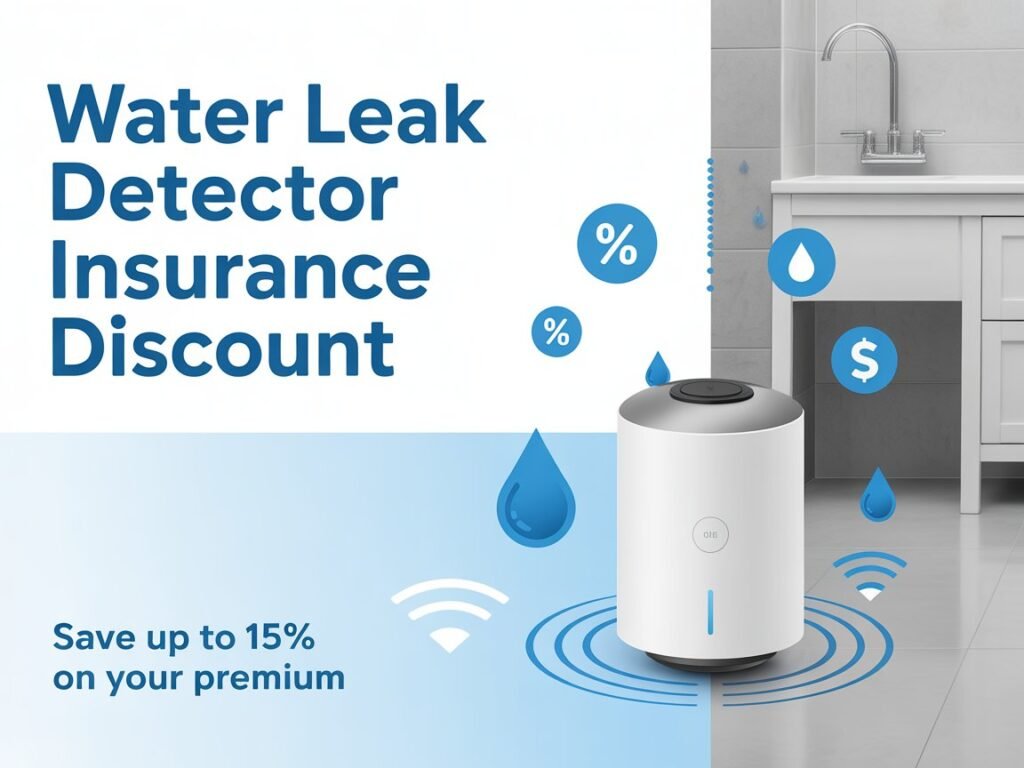
Placement is everything. A cheap sensor in the right spot is more valuable than an expensive one in the wrong place.
Insurers and risk guides (like Travelers and other home-protection resources) consistently suggest placing sensors in areas most prone to leaks.
Here’s a room-by-room strategy.
3.1 Utility and Mechanical Areas
These are top priority — the leaks here can be huge.
- Water heater
- Put a sensor on the floor next to the heater, where water would first pool if it failed.
- Furnace / boiler area
- If you have a boiler or hydronic heating, place a sensor nearby.
- HVAC / AC condensate pan
- Put a sensor in or next to the pan that collects condensation — clogged drain lines can overflow and quietly damage ceilings.
3.2 Kitchen
Multiple hidden water sources here.
- Under the kitchen sink
- Place a sensor toward the back underneath the plumbing trap.
- Behind the dishwasher
- If you can’t reach behind it, place a sensor just under the front edge where water would flow out.
- Behind or under the fridge (if it has an ice maker or water line)
- Put a sensor near the water line connection or at the back on the floor.
3.3 Bathrooms
Small spaces, but leak disasters.
- Under each bathroom sink
- Same idea: under the P-trap, somewhere water would pool.
- Next to toilets
- Place at the base where a failed wax ring or supply line leak will show up first.
- Near bathtubs and showers
- Just outside the tub or shower where water would reach the floor if something overflows or a drain backs up.
3.4 Laundry Area
This one is huge for upstairs laundry rooms.
- Behind or beside the washing machine
- Close to the supply hose connections and the drain line.
- If your washer is on an upper floor, a single burst hose can cause tens of thousands in damage — insurers really care about this one.
3.5 Basement and Crawlspace
Water here can go unnoticed for a long time.
- Near sump pump and floor drain
- Put sensors close to the sump pit and any basement floor drains.
- Near main water entry
- Where the main water line comes into the house, especially if that area has a shutoff valve or pressure regulator.
3.6 Near Smart Shutoff / Main Flow Monitor
If you have a whole-home flow monitor or automatic shutoff valve:
- Install it on the main supply line (as recommended by the manufacturer)
- Add backup spot sensors on the floor nearby, in case of a leak at the valve or fittings
Travelers and other insurers emphasize that a home water protection setup is best when several components work together — spot sensors in key rooms plus a central shutoff or monitor on the main.
4. How to Set Alerts So You Actually Catch Leaks
A leak detector only earns its keep — and makes your insurer happy — if you actually respond to alerts.
Most modern systems offer:
- A smartphone app (push notifications)
- Email or text alerts
- A local siren or beep on the sensor itself
- Optional integration with smart-home hubs (Alexa, Google Home, etc.)
Here’s how to configure alerts in a way that works in real life.
4.1 Turn On App Alerts for Multiple People
- Add both you and a partner/family member as users
- Enable push notifications and critical alerts if your phone supports them
- Consider email or SMS as backup in case push notifications are muted
If the app allows, choose “high priority” or “urgent” for leak alerts, not the same level as random status messages.
4.2 Configure Flow Alerts (for Whole-Home Monitors)
Many smart monitors watch for unusual flow. You’ll usually see settings like:
- “Continuous flow” alerts
- Example: “Alert me if water has been running non-stop for more than 20–30 minutes.”
- High usage alerts
- Example: “Alert me if daily usage exceeds 2x my normal average.”
Start with conservative defaults recommended by the manufacturer, then fine-tune:
- If you get false alarms from sprinklers or long showers, adjust the duration or thresholds slightly
- But don’t disable alerts completely — that defeats the prevention benefit insurers like
4.3 Enable Away/Vacation Mode
Many systems have a “vacation” or “away” mode that:
- Tightens thresholds (shorter continuous flow time)
- Enables automatic shutoff faster if a leak is detected
This is especially valuable for insurers because big claims often happen when people are away for days and don’t notice the water running.
4.4 Test Monthly
Simple but powerful:
- Pour a cup of water next to one sensor and confirm:
- Alarm sounds
- App notifies you correctly
- Trigger a test alert in the app (if available) for flow monitors
Some manufacturers and smart-home guides recommend regular testing and firmware updates to keep devices reliable.
5. How to Actually Get a Water Leak Detector Insurance Discount
Now let’s connect this to the insurance side so your efforts show up as real money.
Many device makers and insurers suggest steps like these to maximize your water leak detector insurance discount potential:
Step 1: Ask Your Insurer Before You Buy
Call or chat with your home insurance company and ask specific questions:
- “Do you offer a water leak detector insurance discount or smart-home/ protective-device discount?”
- “Do you require specific brands or features (like automatic shutoff) to qualify?”
- “Is there a minimum number of sensors or a requirement to install on the main water line?”
Some carriers partner with particular vendors (Notion, ADT packages, leak-monitoring brands) and may offer special pricing or higher discounts if you use those.
Step 2: Choose a Qualifying System
Use what you learned to pick:
- A basic network of smart spot sensors, plus
- A whole-home monitor or automatic shutoff valve if your budget allows
Many insurers appear to give the best discounts for:
- Real-time monitoring
- Auto shutoff capability
- Professionally installed main-line devices
Step 3: Install and Document
Once installed:
- Keep invoices or receipts for equipment and installation
- Take photos of the main unit on your water line
- Save screenshots of the app showing connected sensors and alerts
Smart device and insurer guides recommend providing specs and proof to your insurer when requesting a discount.
Step 4: Notify Your Insurer and Confirm the Discount
Contact your insurer again and say something like:
“I’ve installed a [brand/model] water leak detection system with sensors at key points and an automatic shutoff valve on the main. Can you apply your water leak detector insurance discount, and what documentation do you need?”
Then:
- Send any required proof (receipts, photos, device certificate)
- Verify the discount shows on your declarations page or billing
- Re-check at each renewal — some discounts require periodic confirmation that the system is still active
6. Cost vs Savings: Is It Worth It?
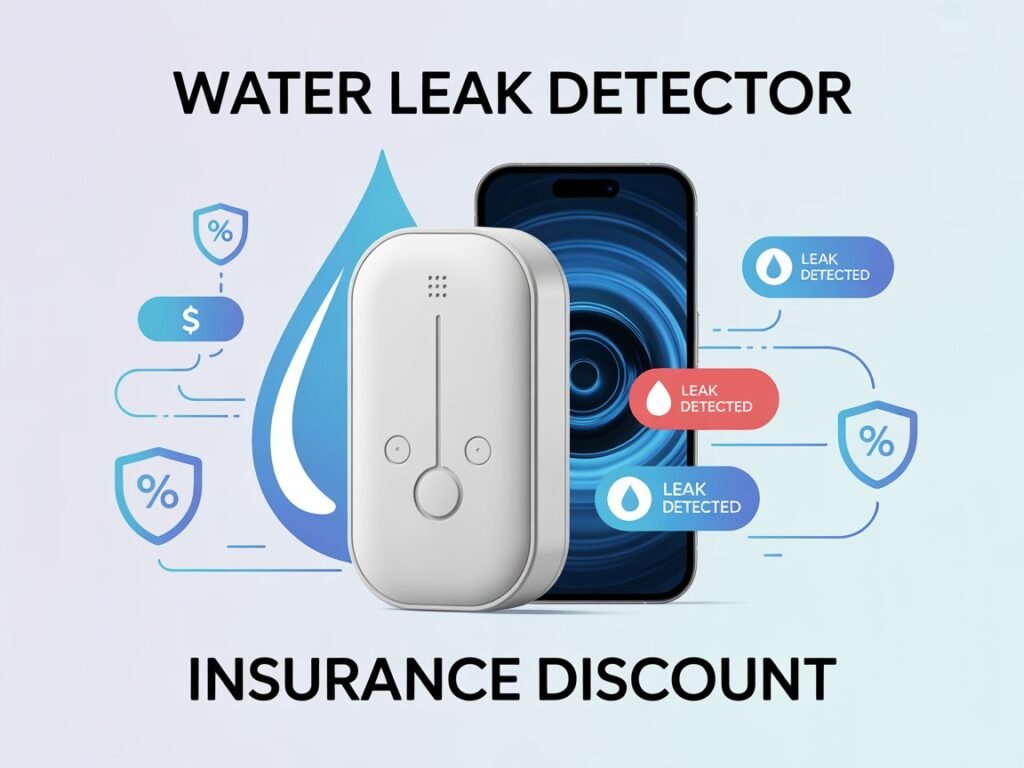
Let’s do a simple thought experiment.
Typical cost ranges, according to consumer and insurer resources:
- Basic smart leak sensors: about $30–$60 each
- Starter kits with multiple sensors + hub: a few hundred dollars
- Whole-home smart shutoff installed by a plumber: often $400–$1,000+, depending on device and labor
Now layer in discounts and avoided losses:
- Suppose your system costs $600 (a main shutoff + a handful of sensors).
- Your insurer gives you a $150/year discount (roughly 10–15% of a $1,000–$1,500 policy or a big discount on the water coverage portion).
- Over 4 years, that’s $600 in saved premiums — the system just paid for itself.
Now compare that to one decent leak:
- StreamLabs notes average water damage claims can reach $15,000, and some real-world stories show losses in the hundreds of thousands when leaks go undetected.
So even if your insurer offers no discount, but your system prevents or minimizes a single big leak, it’s still a huge financial win. The discount is just the cherry on top.
7. Quick FAQ: Water Leak Detector Insurance Discount
Q1: Do all insurers offer a water leak detector insurance discount?
No. Many do, especially as part of broader smart home or protective device discounts, but it’s not universal. Some give device rebates instead of premium discounts. Always ask your specific insurer.
Q2: Do I have to use a specific brand to qualify?
Some insurers partner with specific brands (for example, offering discounts on certain systems or free kits), while others accept any device that meets basic criteria like real-time monitoring and shutoff. Check your insurer’s Approved Devices list if they have one.
Q3: Will just one sensor near my water heater earn a discount?
Sometimes basic sensors help, but many insurers seem to prefer whole-home or more complete solutions, especially those with automatic shutoff. A single sensor might not be enough for a discount on its own, though it still helps reduce risk.
Q4: Are leak detectors a replacement for good water coverage in my policy?
No. They’re prevention tools. You still need solid coverage for accidental water damage, plus endorsements like water backup if you want protection from sewer/sump backups (different issue).
Q5: Where should I mention my detectors when shopping for new insurance?
Tell the agent or online quote system that you have:
- A smart water leak detection system
- Automatic shutoff (if applicable)
- Monitoring via app or professional service
Ask directly: “Do you offer a water leak detector insurance discount, and how much could that save?”